Community Colleges
Many community colleges around the country have opened their doors to homeschooled teenagers, giving them an opportunity to start their college careers early, to gain classroom experience and college credit, to challenge them with more difficult materials, and to expand their horizons. Many parents look to community colleges to provide instruction in materials that they are not well suited to teach themselves.
Links

And What About College?: How Homeschooling Can Lead to Admissions to the Best Colleges & Universities
Get all your questions about helping your homeschooled student apply and get accepted to college answered with this resource. It discusses transcripts, diplomas, education choices, online colleges, and more. If you are worried about whether your homeschooled student can have a successful college search, then this book will help allay those fears and offers good support and information.
American Association of Community Colleges (AACC)
Founded in 1920, the American Association of Community Colleges (AACC) has, over four decades, become the leading proponent and the national “voice for community colleges.” Today, AACC’s membership represents close to 95 percent of all accredited U.S. two-year community, junior and technical colleges and their 10.5 million students, as well as a growing number of international members in Puerto Rico, Japan, Great Britain, Korea, and the United Arab Emirates. The colleges are the largest and fastest-growing sector of U.S. higher education, enrolling close to half (45 percent) of all U.S. undergraduates. AACC supports and promotes its member colleges through policy initiatives, innovative programs, research and information and strategic outreach to business and industry and the national news media.
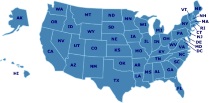
Looking for Another State?
Featured Resources
As an Amazon Associate, we earn from qualifying purchases. We get commissions for purchases made through links on this site.
TruthQuest History
The TruthQuest History series consists of ten volumes that serve as guides for parent wishing to use real books in their approach to history education. They are full of book recommendations, along with information on the topics of study. There are also writing exercises included in these texts.

One Thing at a Time : 100 Simple Ways to Live Clutter-Free Every Day
Simple, effective ways to put things in their placeThose piles of papers, clothes, and other things you thought you'd successfully de-cluttered have returned, and this time they brought friends. What's the use of trying to fight the clutter? Is there a better way?This powerful and useful guide delivers solutions that work, no matter how overwhelmed you feel. The answer isn't an elaborate new system, or a solemn vow to start tomorrow. Instead, psychotherapist and organizer Cindy Glovinsky shares ...

Elementary Geography
Elementary Geography is a reprint of the original work by Charlotte Mason. It includes her ideas about teaching children about their world, with poetry selections throughout the book. Explores ideas of place from space to our earth, seasons, map making, and topography. Written in a pleasing conversational style, it is useful for understanding teaching methods, memorization, and copy work.

Cuisenaire Rods Multi-Pack
Grades Pre K & up. An economical way to bring rods into the classroom. Pack contains six sets of 74 rods, six trays with, and Teacher's Guide. For use with 12-18 students.
The Story of the World
This book series by Susan Wise Bauer is another that is best enjoyed as a read aloud rather than seen as a history textbook. It is full of engaging stories, mixing facts and historical legends. The companion study guides offer questions, narration exercises, activities, crafts, and reproducible pages. There are also lists for each chapter of supplemental books that are easily found at your local library.
Story of the World: History for the Classical Child, Volume 1: Ancient Times (From the Ear...